
Conventional sleeper — commonly Tashkent South
Relevant long-distance Khiva services can use Tashkent South rather than Tashkent Central. Always follow the arrival station shown on the actual ticket.

Direct overnight trains connect Khiva with Tashkent. Compare sleeper classes, departure times and prices, then choose whether the overnight journey works better for you than flying east.

Choose your travel date to compare current departures, classes and prices.
The direct Khiva–Tashkent train is a long journey, but the timetable can work in your favor because much of the distance is covered overnight. You can spend most of your final day in Khiva, board the train later, sleep onboard and continue east toward Tashkent while you rest.
Current conventional services typically take roughly 13½–14 hours depending on the train. Sleeper accommodation ranges from low-cost open 3rd Class berths to enclosed 2nd Class compartments, more private 1st Class sleepers and Grand Deluxe on selected departures. A faster day train, Jaloliddin Manguberdi, also runs this direction on selected days in around 7½ hours with seating only — worth checking if your date matches its limited schedule.
The right choice depends less on train speed than on how well you sleep, how much privacy you want and whether the arrival time in Tashkent fits the rest of your trip.
Compare Khiva → Tashkent TrainsYou do not need to travel back to Urgench first when your selected train departs directly from Khiva. Khiva railway station is connected to the long-distance network, and direct services operate toward Tashkent.
Urgench may still appear as an intermediate stop on some services, but a direct Khiva → Tashkent ticket does not require a separate road transfer between the two cities.
View Khiva Railway Station on Google MapsAn evening or late-day departure can let you keep most of your final day in Khiva instead of sacrificing it to daytime travel. That's one of the strongest arguments for the sleeper train: the journey starts after much of the sightseeing day is already finished.
Check your hotel's luggage-storage and check-out arrangements separately — do not assume every property will hold bags without asking.
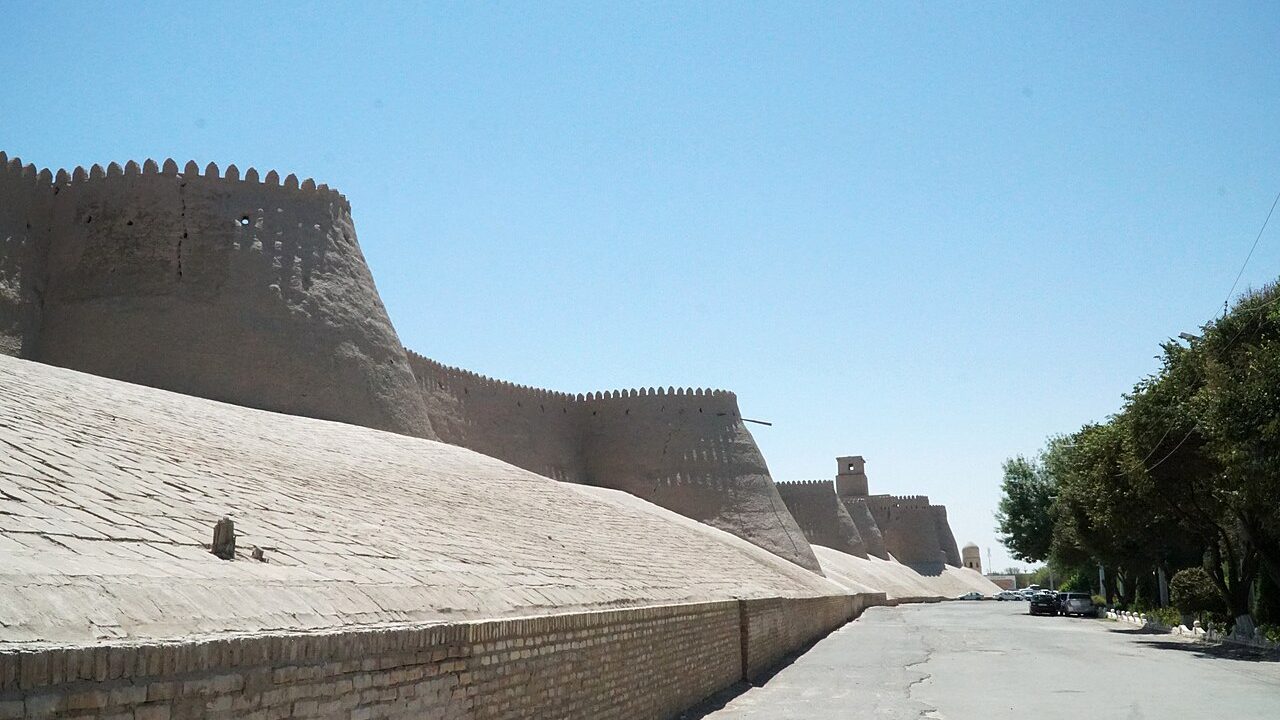
Arriving by train? Compare activities for the time you have in Tashkent.
Current conventional services take roughly 13½–14 hours depending on the departure. Most of the journey can run overnight, with arrival in Tashkent the following day. Jaloliddin Manguberdi, where it operates, covers the same route in about 7½ hours during the day.
Relevant long-distance Khiva services can use Tashkent South rather than Tashkent Central. Always follow the arrival station shown on the actual ticket.
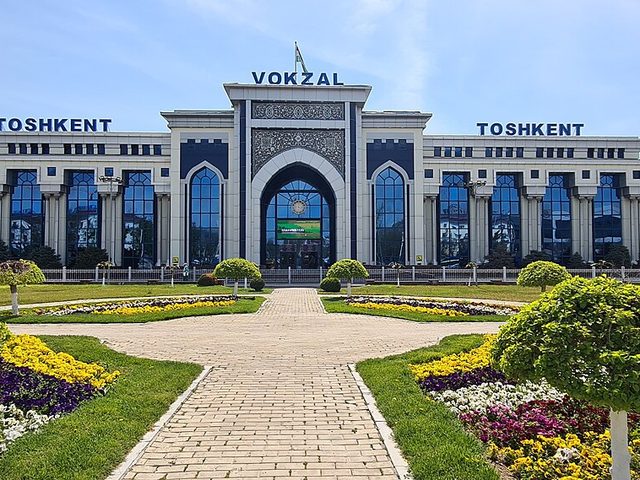
The faster day train, where it runs, arrives at Tashkent Central rather than Tashkent South.
A late-morning or midday arrival still leaves part of the day available, but it is not equivalent to arriving first thing in the morning.
If you need a full working or sightseeing day in Tashkent, compare the train with a flight, or with Jaloliddin Manguberdi on a date it operates, before booking.
Third Class is the budget choice. Berths are arranged in an open shared carriage rather than a private compartment.
On a 13–14 hour journey, this works best for passengers who care more about price than privacy.
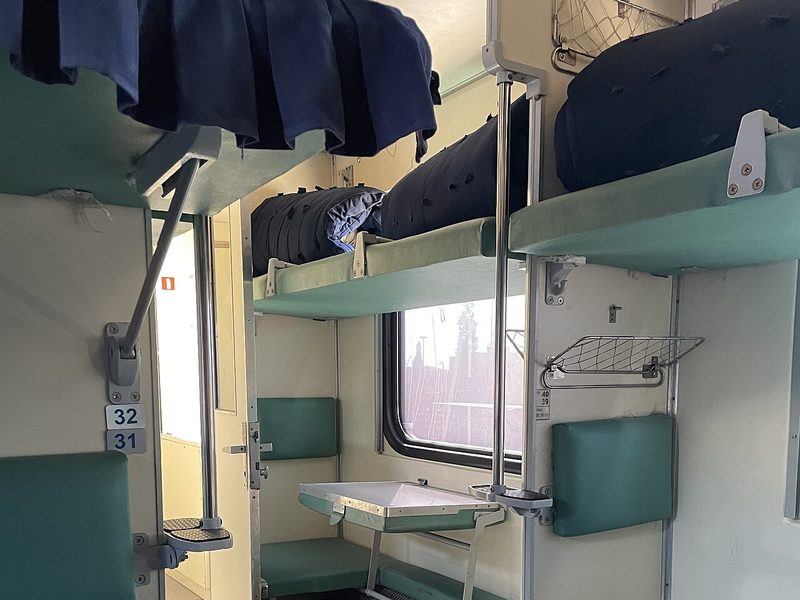
Second Class / Kupe is usually the first option to compare for an overnight journey this long. The enclosed shared compartment provides more privacy than an open sleeper without jumping to the highest fare.
For many travelers, this is the strongest balance between price and comfort.
First Class / SV is aimed at passengers who want fewer people sharing the compartment. For two travelers together, the two-berth arrangement can be especially attractive.
Grand Deluxe appears on selected departures and can cost substantially more than ordinary First Class. Check exactly what the selected carriage includes before paying the premium.
Cheapest: 3rd Class.
Best balance: 2nd Class / Kupe.
More private: 1st Class / SV.
Most expensive: Grand Deluxe where offered.
Best for many first-time sleeper passengers: 2nd Class.
Compare two 1st Class berths against two places in a shared 2nd Class compartment. If the price difference is reasonable, First Class can give two travelers a much more private overnight journey.
A solo passenger booking 2nd Class normally shares the compartment with other passengers unless a full-compartment product is specifically offered.
If shared sleeping makes you uncomfortable, compare First Class or the most private available option before booking.

Lower berths are easier to access and more convenient if you need to sit upright or reach luggage frequently. Upper berths can feel more private but require climbing.
If berth position matters, book while enough inventory remains.
You want to use most of the day in Khiva, can sleep reasonably onboard, and sleeper prices are attractive.
You prefer rail over airport procedures and the arrival timing works for your plans in Tashkent.
Minimum travel time matters most, or you need to arrive earlier than an overnight train allows.
You dislike sleeping on trains, or the flight schedule is significantly more convenient.
Compare the full itinerary, not only vehicle time.
Often, yes. The train becomes your sleeping accommodation for much of the night.
But whether it truly replaces a hotel depends on departure and arrival time. If you leave Khiva late and reach Tashkent around midday, you still use part of the following day in transit.
On this route, it can be. The journey is long enough that privacy, noise and the ability to close the compartment matter more than they do on a short train ride.
If the price difference is manageable, Kupe can offer much better overnight value than an open sleeper.
First Class makes most sense for two travelers who value privacy. It does not shorten the journey — you're paying for the sleeping arrangement, not a faster train.
Only when the specific carriage offers something you actually value enough to pay for.
Do not assume "Grand Deluxe" means a private bathroom, shower or hotel-style suite unless the booking details explicitly confirm it.
Bring water and anything specific you want to eat. Do not rely on a particular meal or restaurant service unless it's confirmed for your train.
Do not rely on consistent onboard Wi-Fi. Download your ticket, maps and hotel details before departure.
Power availability varies by carriage. Start with a full battery and carry a power bank for a long overnight trip.
Long-distance rolling stock can vary. Even when air-conditioning is available, overnight cabin temperature may not feel identical throughout the journey — carry a light extra layer.
Keep your passport, phone, wallet and ticket with you rather than inside a large bag. Check the allowance shown during booking or on your ticket rather than assuming a fixed limit across all services.
More on luggage across Uzbekistan trains →Direct Tashkent services depart from Khiva railway station. Check the departure time and carriage information before arriving.
View Khiva Railway Station on Google MapsFind bookable experiences that fit around your arrival.
Long-distance departures vary by date. Some operate overnight, making the journey useful for passengers who want to leave Khiva later in the day and continue east while sleeping.
Search your actual travel date to compare departure time, arrival time and sleeper classes.
Indicative fares — sleeper fares depend on class and the specific train.
| Jaloliddin Manguberdi (day train) | Indicative fare |
|---|---|
| Economy | from around $64 |
| VIP | around $100 |
| Conventional overnight sleeper | Indicative fare |
|---|---|
| 3rd Class (Platskart) | around $10–$21 |
| 2nd Class (Kupe) | around $20–$35 |
| 1st Class (SV) | around $25–$45 |
| Grand Deluxe (where offered) | check current listing — a substantial premium over 1st Class |
If you want a specific lower berth, 1st Class compartment or the lowest sleeper fare, check early once tickets become available.
The most private and cheapest options can both disappear first, for different reasons.
Check AvailabilityA different class may still have availability for your date.
If your schedule is flexible.
Not as a default fallback.
If arrival time in Tashkent matters more than keeping your last day in Khiva.
Do not assume seats will definitely return.
Direct trains run from Khiva to Tashkent.
The journey is long but commonly operates overnight.
2nd Class / Kupe is the first sleeper class many travelers should compare.
3rd Class is cheapest; 1st Class is more private.
Relevant services can arrive at Tashkent South.
The train is most attractive when you want to use the day in Khiva and travel east overnight.
Compare available departures for your date.
Khiva railway station; commonly Tashkent South on arrival.
3rd, 2nd, 1st or Grand Deluxe where offered.
Lower berths are easier to access on a long overnight journey.
Not journey duration alone.
Match your travel documents.
Keep it accessible before reaching the station.
International travelers can arrange Khiva–Tashkent tickets online before travel. Enter passenger names and document information exactly as requested during checkout.
Check the Tashkent arrival station carefully before planning onward transport.
Yes. Direct passenger trains operate from Khiva toward Tashkent.
Not when your selected train departs directly from Khiva. Urgench may be an intermediate stop, but a direct Khiva–Tashkent ticket does not require a separate transfer there.
Current conventional overnight services take roughly 13½–14 hours depending on the train. The Jaloliddin Manguberdi day train, where it runs, takes about 7½ hours.
The conventional service is. Many departures let you spend most of your final day in Khiva, board in the evening and sleep through a large part of the journey.
The conventional overnight sleeper commonly arrives at Tashkent South. The Jaloliddin Manguberdi day train uses Tashkent Central. Follow the arrival station shown on your ticket.
2nd Class / Kupe is usually the best balance between price and privacy.
3rd Class sleeper is generally the lowest-priced sleeper category.
It can be for two travelers who value a more private compartment. It does not reduce journey time.
Only if the features shown for the selected carriage justify the additional fare for you.
Often it can replace much of one night's accommodation, although the journey may continue into late morning or midday the next day.
Yes in pure transport time, but compare airport transfers and schedule against an overnight train that lets you keep your last day in Khiva and uses sleeping hours for the journey.
Do not rely on it. Download anything important before departure.
Power availability varies by carriage, so carry a power bank.
Yes. International passengers can arrange available tickets online through supported booking platforms.
Compare sleeper classes, departure times and prices, then choose the berth that lets you make the most of your last day in Khiva and your arrival in Tashkent.
Check Train Tickets