

FASTEST
Afrosiyob
Current Afrosiyob examples cover Tashkent → Qarshi in roughly 3 hours 40 minutes. The first option to compare when speed matters, a morning arrival is useful, or the fare premium is acceptable.
Direct trains connect Tashkent with Qarshi throughout the day. Current options range from Afrosiyob at under four hours to lower-priced daytime trains around five hours and later Sharq or sleeper services taking about six hours.

Choose your date to compare Afrosiyob, daytime trains and later departures.
Tashkent–Qarshi is one of the routes where the train name genuinely changes the travel day.
Current Afrosiyob services can reach Qarshi in under four hours. Standard daytime trains take closer to five hours, while later Sharq and sleeper-class services can take around six hours and arrive in Qarshi during the night or early morning.
That means the cheapest ticket is not automatically the best value. Paying more for Afrosiyob can save roughly one to two hours and give you a useful morning arrival. A lower-priced daytime seat can still be excellent value if arriving around 14:00 works. The later trains make sense only when their departure time solves a specific problem for your itinerary.
Compare Tashkent → Qarshi TrainsDirect passenger trains connect Tashkent and Qarshi. Current options include Afrosiyob, standard Uzbekistan Railways seated trains, Sharq and conventional sleeper-class trains.
You do not need to change trains in Samarkand when booked through to Qarshi.
Current Afrosiyob examples cover Tashkent → Qarshi in roughly 3 hours 40 minutes. The first option to compare when speed matters, a morning arrival is useful, or the fare premium is acceptable.

Current standard seated services take around five hours and can cost far less than premium Afrosiyob inventory. Daylight journey, afternoon arrival, no need for the fastest train.
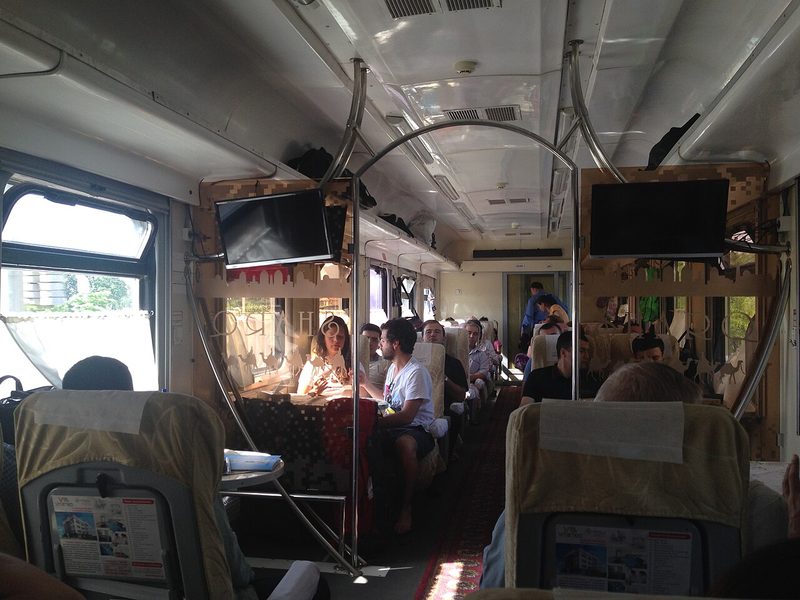
Slower than Afrosiyob and the daytime trains, but its later departure can be useful when you need the day in Tashkent. You preserve daytime in Tashkent but arrive in Qarshi during the night.
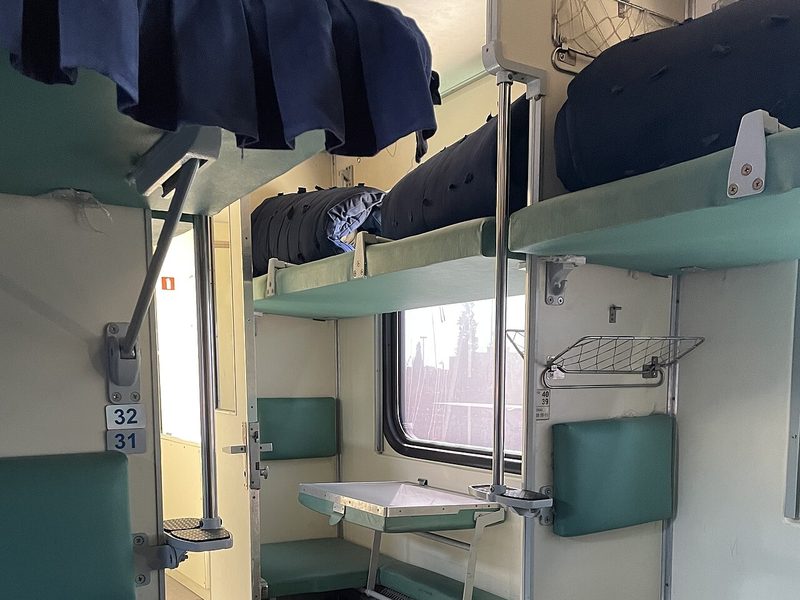
Current conventional trains can offer 2nd Class sleeper accommodation on later departures. The route is only around six hours and some trains arrive between roughly 03:00 and 06:00 — choose it only when the departure time or fare genuinely works for you.
| Afrosiyob | Daytime train | Sharq | Sleeper | |
|---|---|---|---|---|
| Current duration | ≈3h40 | ≈5h | ≈6h15 | ≈6h |
| Typical timing | Early morning | Morning | Evening | Evening/night |
| Accommodation | Seated, premium classes | Seat | Seat | Berth |
| Main advantage | Speed | Value | Later departure | Sleep / berth |
| Main drawback | Higher fare | Slower | Night arrival | Awkward arrival |
Exact duration depends on the train selected.
Once your train is chosen, compare bookable activities that fit around the rest of your trip.
Often, yes — if the time saved matters.
Current Afrosiyob can save roughly 1¼ hours compared with a standard daytime train and more than two hours compared with Sharq.
But if the fare premium is large and a 14:00 arrival works perfectly, the standard seated train may offer better value.
Pay for Afrosiyob when you are buying useful time — not simply because it is the famous train.
An Afrosiyob arriving around 10:00 can give you several additional hours in Qarshi compared with a standard train arriving around 14:00.
That matters when you have meetings, onward transport, hotel plans or same-day commitments. If you do not need those hours, paying considerably more may create little practical value.
Current journeys range from under four hours to a little over six hours depending on the train.
≈ 3h 40m
≈ 5h
≈ 6h+
≈ 6h
The train type changes the journey time materially on this route.
Yes.
For many travelers, this is likely to be the best value option. It is slower than Afrosiyob, but it leaves at a comfortable morning time, travels during daylight, reaches Qarshi in early afternoon, avoids a night arrival, and uses standard seated accommodation.
Reaching Qarshi before lunch matters, saving about an hour or more has real value, or the premium fare is acceptable.
Lower price matters, early-afternoon arrival is fine, or you prefer a more relaxed departure time.
If both fit your itinerary, this is mainly a time-versus-price decision.
Sharq makes sense primarily when the evening departure is more useful than the faster daytime trains — departure after 20:00, arrival after 02:00. That is a very specific product.
Choose it when you need the full day in Tashkent, someone can meet you in Qarshi, or a late-night arrival does not create problems. Do not choose it merely because it is a named train.
Usually not.
The faster trains cover the route in roughly four to five hours. A sleeper only becomes relevant when you choose one of the later conventional departures — and even then, check the arrival time carefully. Sleeping for part of a six-hour journey may not compensate for arriving at 03:00–05:00.
A late train can look attractive because it preserves the day in Tashkent. But reaching Qarshi in the middle of the night changes hotel access, local transport, pickup arrangements and how useful the first hours after arrival are.
Compare the complete itinerary. Do not focus only on departure convenience.
Find experiences that fit around your arrival in southern Uzbekistan.
Economy / Standard is the logical starting point when available. Business offers more premium comfort for the same journey time. VIP or a premium category, where offered, is the highest comfort level.
Passengers on the same Afrosiyob arrive at the same time. Premium class does not increase speed.
Current inventory can expose premium Afrosiyob or 1st Class pricing substantially above standard conventional seats.
First Class is a comfort purchase. Afrosiyob itself creates the time saving.
The premium cabin does not create additional time saving beyond choosing the faster train.
Current standard rail products can be relatively close in price, while premium Afrosiyob inventory can cost several times more.
Compare time saved, arrival time, class and actual fare — not the train name alone.
Check Current PricesPrincipal current daytime services operate from Tashkent Central, with Afrosiyob services generally using the main high-speed intercity terminal pattern. Different conventional long-distance trains may use other terminals.
Always use the departure station shown for your selected train.

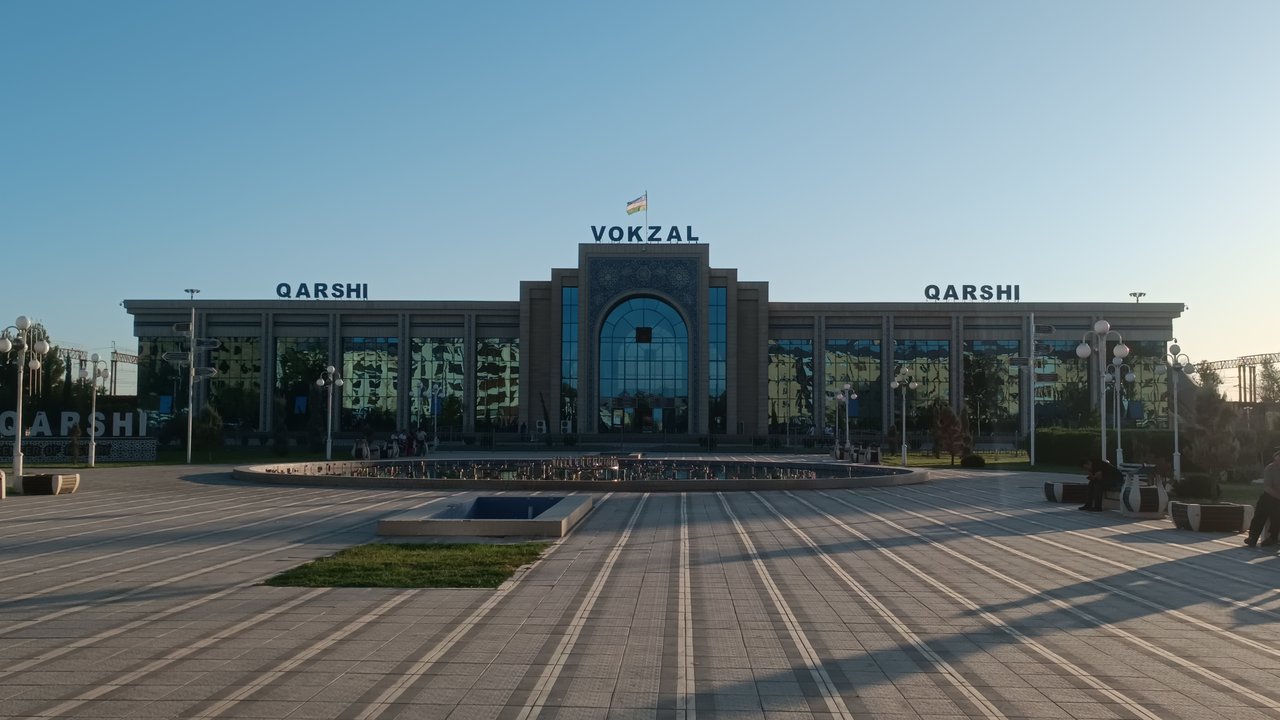
Direct trains arrive at Qarshi Railway Station.
If Qarshi is your final destination, plan local transport from the station according to your accommodation or appointment location.
View Qarshi Railway Station on Google MapsQarshi is a major railway junction in southern Uzbekistan with direct connections toward Tashkent, Samarkand and routes continuing farther south.
Traveling farther south to Termez? Compare the direct Tashkent → Termez night train before planning a connection via Qarshi.

Some services between Tashkent and Qarshi run through the central rail corridor, but a through Tashkent → Qarshi passenger does not need to change trains when booked on a direct service.
Do not book separate Tashkent → Samarkand and Samarkand → Qarshi tickets unless you intentionally want to stop in Samarkand.
City-to-city rail is convenient, 3h40-5h works, or you want to avoid airport procedures.
The train schedule fits your plans well.
Air schedule saves meaningful total time, or your destination is closer to airport logistics.
Same-day timing is critical.
Afrosiyob makes rail unusually competitive on this route because the fastest train is under four hours.
A private vehicle provides door-to-door flexibility. Afrosiyob provides a substantially faster scheduled rail option than conventional trains, while the standard daytime train offers lower-cost city-to-city travel.
For one or two passengers whose schedule matches the rail timetable, train should be compared first.
Best for a useful daytime arrival, business, appointments, onward transport and normal hotel check-in.
Best for preserving daytime in Tashkent, passengers comfortable arriving at night, or a pre-arranged pickup.
Qarshi has enough train variety that departure time should be chosen before class.
If Afrosiyob is important because of the faster arrival, check while your preferred departure and class remain available.
If price matters more, compare the standard daytime trains before moving to night services.
Check AvailabilityDo not change your travel day immediately.
A strong, lower-cost alternative.
May still have availability.
Late-night arrival trade-off applies.
Compare the actual arrival time.
Do not assume seats will definitely return.
This is the central decision on this route.
Compare available departures for your date.
Time versus fare.
Not journey duration alone.
Departure and arrival time matter most.
Confirm the terminal shown for your train.
Match the accommodation to the departure.
Match your travel documents.
Keep it accessible for boarding.
International travelers can arrange available Tashkent–Qarshi train tickets online. Enter passenger names and travel-document information exactly as requested during checkout.
Before paying, check the train, departure station, arrival time and class. On this route, train choice can change the travel time by several hours.
Direct trains connect Tashkent with Qarshi.
Afrosiyob is currently the fastest option at roughly 3 hours 40 minutes.
Standard daytime trains take around five hours and can offer much lower fares.
Sharq and later sleeper services take about six hours and can arrive in Qarshi during the night.
For most travelers, compare Afrosiyob with the daytime seated train first.
Choose Afrosiyob when the time saved is worth the premium.
Choose the standard daytime train when lower price matters more than arriving before lunch.
Yes. Direct trains include Afrosiyob, standard Uzbekistan Railways services, Sharq and conventional sleeper trains depending on departure.
Current journey times range from about 3 hours 40 minutes on Afrosiyob to around six hours on slower services.
Yes. Current inventory includes direct Afrosiyob service between Tashkent and Qarshi.
Afrosiyob is currently the fastest option, with a journey of roughly 3 hours 40 minutes on current examples.
It can be when arriving before lunch or saving more than an hour has real value. A standard daytime train may be better value if early-afternoon arrival is fine.
Yes. Current Uzbekistan Railways seated services take around five hours and can cost substantially less than premium Afrosiyob inventory.
Current inventory can include a later Sharq-family service, though it takes longer and can arrive in Qarshi after 02:00.
Yes. Later conventional trains can sell sleeper accommodation.
Usually not. For most travelers, Afrosiyob or a daytime seated train is more practical because the route can be completed in four to five hours.
Principal current daytime trains use Tashkent Central. Follow the departure station shown for your selected service.
No. Premium class changes comfort, not journey time on the same train.
Yes. It is a strong lower-cost daytime alternative when an early-afternoon Qarshi arrival works for your plans.
Afrosiyob makes rail very competitive because the fastest journey is under four hours. Compare complete door-to-door time before choosing.
Yes. International passengers can arrange available Tashkent-Qarshi tickets online through supported booking platforms.
Decide whether speed or price matters more, then compare Afrosiyob against the daytime and later trains for your date.
Search Train Tickets